Eid al-Adha, one of the most significant holidays in the Islamic calendar, is expected to begin on Wednesday, May 27, 2026, following the Day of Arafah on May 26 and the start of the Hajj pilgrimage season around May 25. As with all Islamic holidays, the exact dates are subject to the sighting of the moon and may vary slightly across countries.
Known as the “Festival of Sacrifice,” Eid al-Adha commemorates Prophet Ibrahim’s (Abraham’s) willingness to sacrifice his son in obedience to God. The holiday marks the culmination of Hajj, bringing together millions of pilgrims in Makkah and millions more around the world in shared observance through prayer, charity, and community.
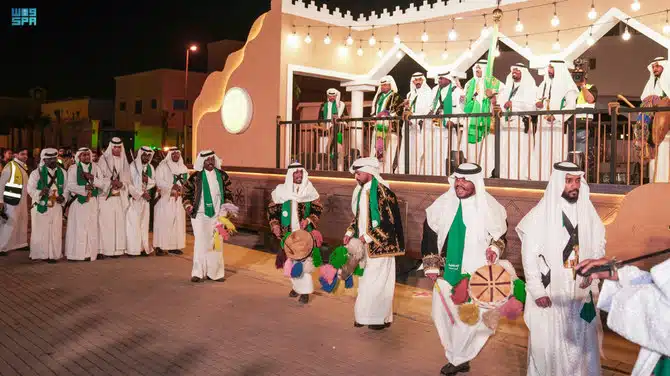
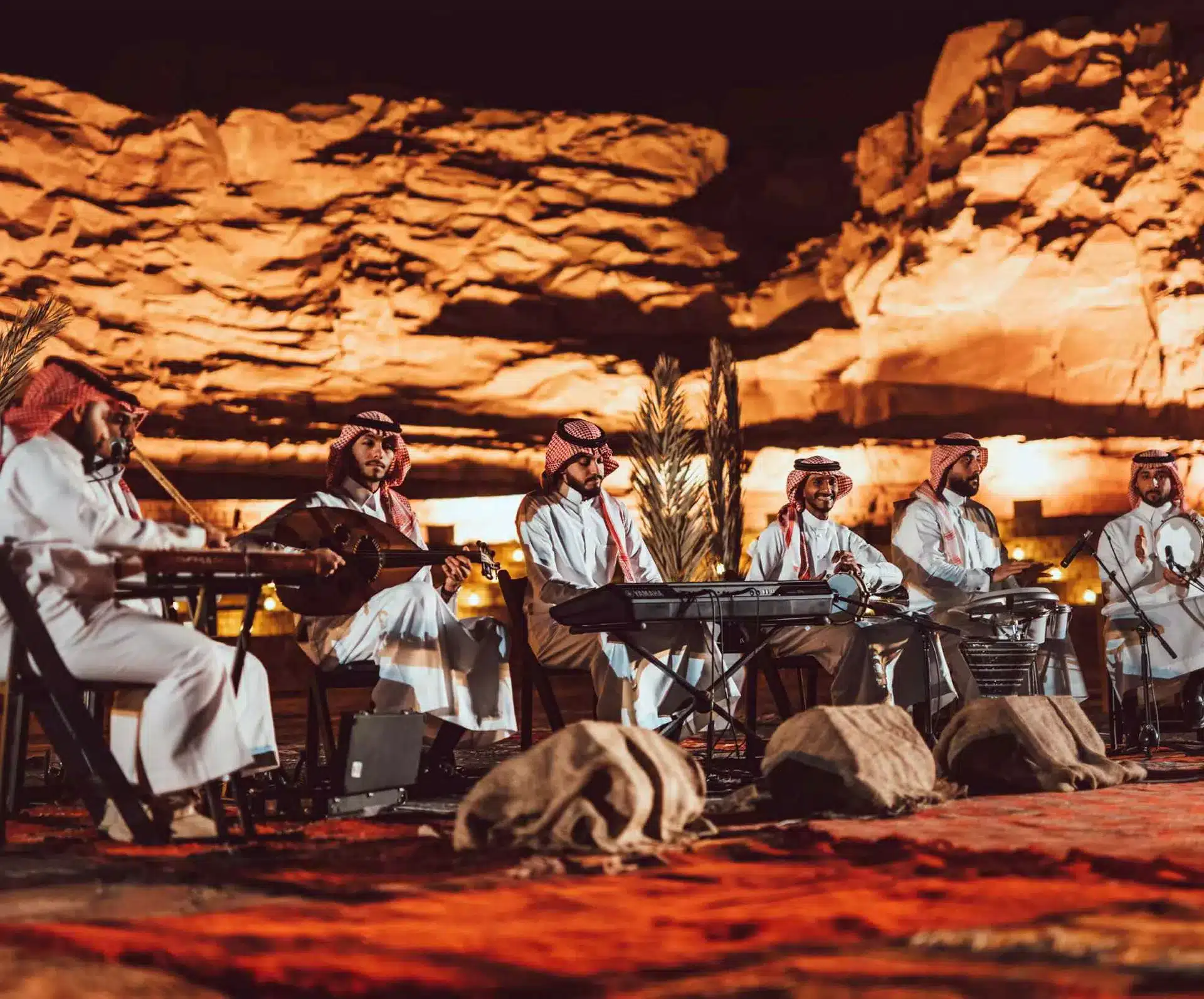
One of many traditional celebrations and performances seen during Eid in Saudi Arabia. Source: Arab News.
A Celebration Rooted in Faith and Generosity
The first day of Eid begins with a special congregational prayer, followed by Qurbani, the symbolic sacrifice of livestock such as sheep, goats, or cattle. The meat is traditionally shared among family, friends, and those in need, reflecting the core values of generosity and social responsibility that define the holiday.
In Saudi Arabia, Eid al-Adha is one of the longest public holidays of the year, observed across both public and private sectors, giving families time to gather, travel, and celebrate together.
Saudi astronomers preparing to sight the crescent moon at the Sudair Astronomical Observatory. Source: Arab News.
Eid in Saudi Arabia
Across the Kingdom, cities like Riyadh come alive during Eid with a festive atmosphere that blends tradition with modern celebration. Families gather for large meals, often featuring dishes such as kabsa, while homes are filled with visits from relatives and friends exchanging greetings of “Eid Mubarak.”
Public spaces, shopping districts, and entertainment venues see increased activity during the holiday, as residents take advantage of the extended break for outings, travel, and cultural experiences. The period surrounding Eid is also a popular time for domestic tourism and staycations, with many planning trips or gatherings in advance.
Special sweets, chocolate, and confectionary treats enjoyed for Eid. Source: Arab News.
A Global Celebration
While deeply rooted in Islamic tradition, Eid al-Adha is celebrated in diverse ways across cultures. In the United States and around the world, Muslim communities mark the occasion with communal prayers, charitable initiatives, and festive gatherings that reflect both religious heritage and local customs.
Beyond its rituals, Eid al-Adha carries a universal message of faith, sacrifice, compassion, and unity that resonates across communities and cultures.
Looking Ahead
As Eid al-Adha approaches in 2026, it offers an opportunity to reflect, reconnect, and celebrate shared values of generosity and community. Whether through acts of charity, time spent with loved ones, or the simple exchange of greetings, the holiday continues to bring people together across borders.