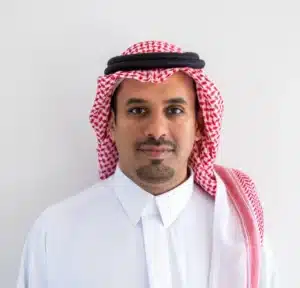

The U.S.-Saudi Business Council is pleased to feature an interview with Silvio Napoli, Chief Executive Officer of Lucid Group, Inc., in our latest Member Spotlight. The discussion covered Lucid’s expanding manufacturing presence in Saudi Arabia, its contributions to Vision 2030, and the Kingdom’s emergence as a global hub for advanced automotive technologies. Mr. Napoli also shared insights into Lucid’s plans to develop local talent, strengthen supply chains, and expand U.S.-Saudi collaboration in electric vehicles and next-generation mobility.
What role does Saudi Arabia play in Lucid’s global strategy, and how can Lucid contribute to the Kingdom’s development as a global automotive and technology hub?
Saudi Arabia is a strategic anchor for Lucid’s global growth. The Kingdom has the ambition, infrastructure and talent to become a globally competitive automotive and technology hub.
Lucid is more than an automaker. We are a technology company with proprietary capabilities in electric powertrains, batteries, software-defined vehicles and autonomous mobility. Saudi Arabia will be a critical base for bringing those technologies to global markets.
At AMP-2 in King Abdullah Economic City, we are building the manufacturing base for our Midsize platform, including vehicles intended for global export and robotaxi applications. This can help the Kingdom move from importing vehicles to developing and exporting advanced technology, products and expertise.
Over time, we expect Saudi Arabia to develop an integrated mobility ecosystem spanning manufacturing, technology, research, supply chains, infrastructure and talent.
How does Lucid’s presence in Saudi Arabia align with Vision 2030 and the Kingdom’s goal of developing a more diversified and advanced automotive industry?
Lucid and Saudi Arabia share a commitment to advancing the future of mobility. Vision 2030’s focus on economic diversification, technology leadership and high-value industries aligns directly with Lucid’s mission and long-term strategy.
Lucid opened Saudi Arabia’s first automotive manufacturing facility in 2023, and the vast majority of our manufacturing employees in the Kingdom are Saudi nationals. The next phase of AMP-2 is adding full vehicle manufacturing to support Midsize vehicles for customers in Saudi Arabia and export markets around the world.
Our contribution extends beyond vehicle production. We are localizing advanced technology and developing capabilities in engineering, software, supply chains, research and workforce training. That is closely aligned with Vision 2030 and PIF’s focus on building integrated, globally competitive ecosystems that create lasting economic value.
What do you see as the biggest opportunities for electric vehicles in Saudi Arabia, and what will be important to accelerating adoption?
Saudi Arabia has an opportunity to build an integrated mobility ecosystem from the outset, connecting advanced manufacturing, technology, infrastructure, research and talent. The opportunity is not limited to selling electric vehicles in the Kingdom. It includes developing technologies and vehicles in Saudi Arabia for global consumer and autonomous-mobility markets.
Adoption will depend on quality, accessibility, charging and a strong ownership experience. Our Midsize platform will bring Lucid’s efficiency, technology and driving experience to a broader customer base, while creating a scalable foundation for privately owned vehicles and robotaxis.
Where do you see the greatest opportunities for U.S. automotive and technology companies to contribute to the growth of Saudi Arabia’s mobility ecosystem?
The greatest opportunity is to build globally competitive capabilities together. U.S. companies can bring expertise in advanced manufacturing, software, artificial intelligence, autonomy, engineering and research, while working with Saudi partners to localize technology, develop talent and strengthen supply chains.
Lucid demonstrates what this cooperation can achieve: proprietary American technology, an expanding Saudi manufacturing base and products developed for global markets. By combining international expertise with Saudi talent and capability, the Kingdom can become a launch base for advanced vehicles, robotaxis and other mobility technologies serving markets around the world.
Looking ahead, what are Lucid’s priorities in Saudi Arabia and what are you most excited about as the Kingdom’s automotive industry continues to develop?
Our immediate priority is completing the expanded AMP-2 facility in KAEC. As the manufacturing launch base for our Midsize platform, we are installing and commissioning the systems required to bring stamping, body-in-white, paint, general assembly, drive-unit manufacturing and battery-pack assembly online.
Our ambition extends beyond manufacturing. We want to help build a broader technology and mobility ecosystem encompassing engineering, software, autonomous mobility, research, localized supply chains and Saudi talent. Our future Midsize platform can support both consumer vehicles and robotaxis manufactured in Saudi Arabia for use around the world.
We are working with suppliers localizing operations in the Kingdom, research institutions including KAUST and KACST, and workforce-development partners including the Saudi Human Resources Development Fund, Saudi Logistics Academy and National Automotive and Vehicles Academy. Together with the Saudi government, these partnerships are supporting the training and development of more than 450 Saudis while strengthening local supply chains and technology capabilities.
What excites me most is the opportunity to translate investment into durable capability: Saudi talent developing advanced technology, Saudi facilities producing globally competitive products, and Saudi Arabia becoming an exporter of next-generation mobility.